Sir William Vaughan was a Royalist soldier and governor of Shrawardine Castle during the Civil War. His nickname, the Devil of Shrawardine, is recorded in the Dictionary of National Biography. The castle's role as his garrison is also documented by Historic England. Thomas, DNB ↗; Historic England ↗.
Royalist governor of Shrawardine Castle
The parish-register account reproduced by J. E. Auden dates the establishment of the Royalist garrison to 28 September 1644. It names Colonel Sir William Vaughan as governor and identifies the castle as the headquarters of his forces. This is evidence of his military command, rather than ownership of the castle. Auden, p. 63 ↗.
Vaughan also commanded troops in the field. Historian Jonathan Worton describes him as a cavalry veteran returned from Ireland, but cautions that the date when he became the effective commander in Shropshire is unclear. In mid-May 1645 Vaughan left his Shrawardine headquarters to join the king's main field army. Worton, pp. 49–50 ↗.
The nickname and its evidence
Writing in 1899, Daniel Lleufer Thomas suggested that Vaughan's seizure of Parliamentarians' property may explain the nickname. His biography cites the Royalist newsbook Mercurius Aulicus, but gives the explanation as a possibility. The original newsbook passage has not been checked for this guide, so the nickname's precise origin remains uncertain. Thomas, DNB ↗.
Thomas also recounts an episode in which Thomas Mytton captured Vaughan while he was receiving communion in Shrawardine church in October 1644. According to this account, Vaughan was allowed back into the castle to arrange its surrender, but instead had the drawbridge raised and refused to leave. This story is presented here as the biography's account, based on earlier reports. Thomas, DNB ↗.
The garrison and the village
The garrison's occupation brought destruction to neighbouring buildings. N. W. Jones's archaeological survey article describes the demolition of the church's chancel after the fall of Shrewsbury in February 1645, followed by further demolition in June. Drawing on the parish account, it also records the burning of castle outbuildings, the parsonage and much of the village, ostensibly for the garrison's protection. Jones, pp. 15–16 ↗.
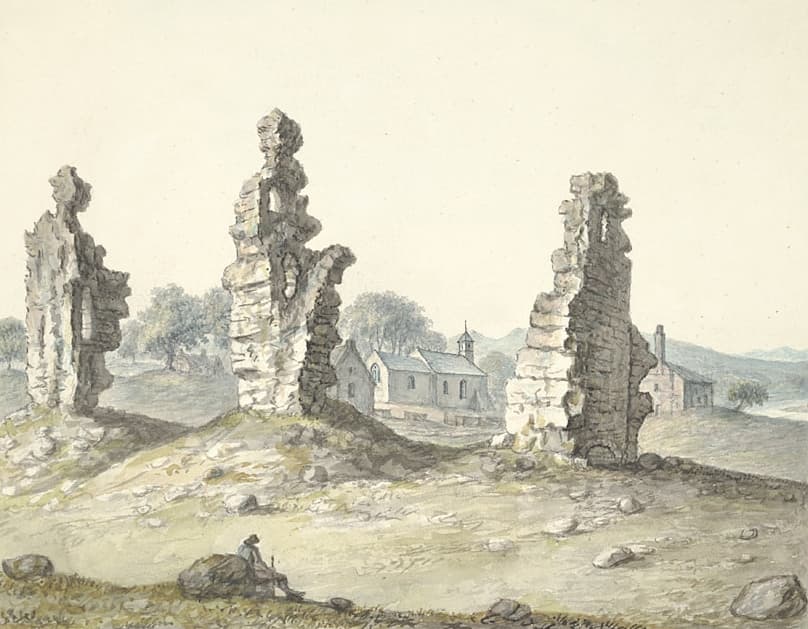
These accounts describe damage during the Royalist occupation; they do not establish that Vaughan personally ordered each act. Historic England attributes the demolition to the garrison, although its scheduling compresses these events into the siege itself. Historic England ↗; Jones, pp. 15–16 ↗.
The surrender of 1645
Auden and Jones both date the castle's surrender to Parliamentarian forces to 29 June 1645. Historic England describes a siege lasting five days. Jones reports that the castle was apparently burned within two weeks of its fall, after which stone was taken for repairs to Shrewsbury Castle. Auden, p. 63 ↗; Jones, p. 16 ↗; Historic England ↗.
There is a conflicting date in Historic England's separate listed-building entry, which says the castle was slighted — deliberately damaged — in 1644. Its scheduling supports the 1645 sequence. The discrepancy remains unresolved. Listed-building entry ↗; scheduling ↗.
Vaughan's later career
Vaughan continued campaigning after the loss of Shrawardine. Worton records victories in Corvedale and at High Ercall in July 1645. Vaughan later served in Ireland under Ormonde and was killed at Rathmines in 1649. Worton, p. 50 ↗; Thomas, DNB ↗.
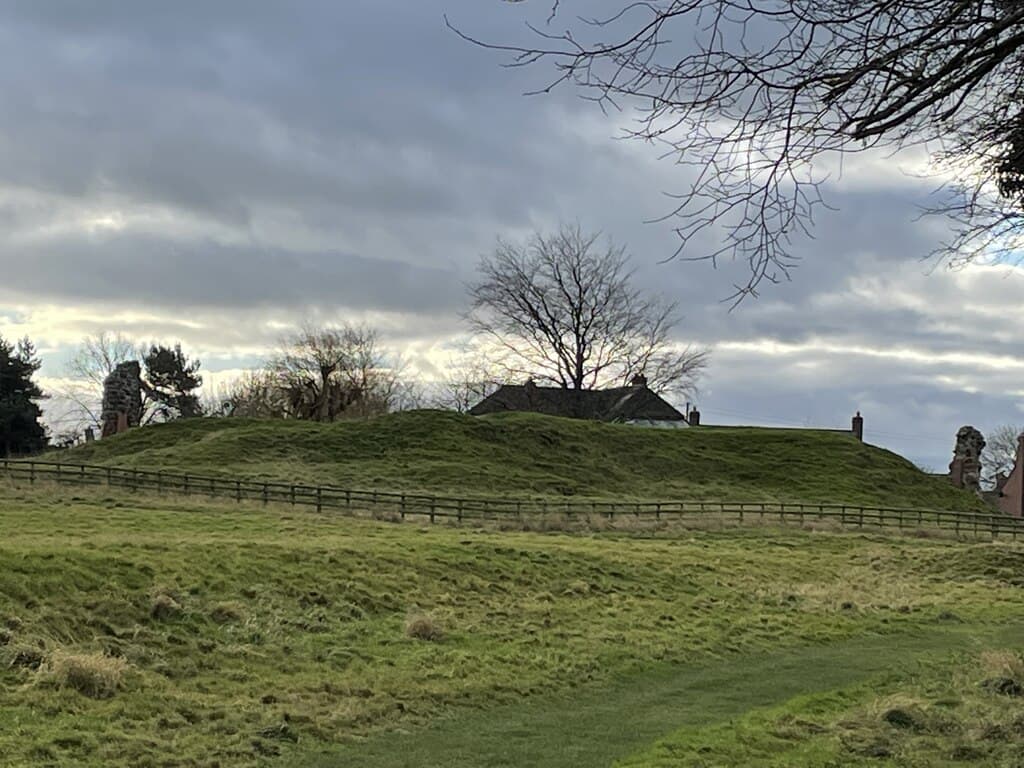
For the surviving site and its earlier history, see Shrawardine Castle, or browse the History section. Further guides to St Mary's Church and the Civil War are in preparation.
Sources & further reading
- Historic England, Shrawardine castle and settlement remains, NHLE 1015707 (scheduled 1969; amended 1997). Accessed 18 September 2026. ↗
- J. E. Auden, The Anglo-Irish Troops in Shropshire, Transactions of the Shropshire Archaeological Society, vol. 50, part 1 (issue dated 1939), pp. 49–64, especially p. 63. Accessed 18 September 2026. ↗
- Daniel Lleufer Thomas, Vaughan, William (d.1649), Dictionary of National Biography, vol. 58 (1899), via Wikisource. Accessed 18 September 2026. ↗
- Jonathan Worton, The Royalist and Parliamentarian War Effort in Shropshire During the First and Second English Civil Wars, 1642–1648, University of Chester PhD thesis (2015), especially pp. 49–50; consulted in the online transcription on Paperzz. Accessed 18 September 2026. ↗
- N. W. Jones, Archaeological Surveys at Shrawardine Castle, Transactions of the Shropshire Archaeological and Historical Society, vol. 77 (2002; issued 2004), pp. 15–25, especially pp. 15–17. Accessed 18 September 2026. ↗
- Historic England, Remains of Shrawardine Castle, NHLE 1366944 (listed 1958; amended 1987). Accessed 18 September 2026. ↗